3.3. Kotlin Eclipse environment building

发布时间 :2023-10-12 23:00:04 UTC      

Eclipse through Marketplace to install Kotlin plug-in, open Eclipse, select Help-> Eclipse Marketplace… menus, searching for Kotlin plug-in:
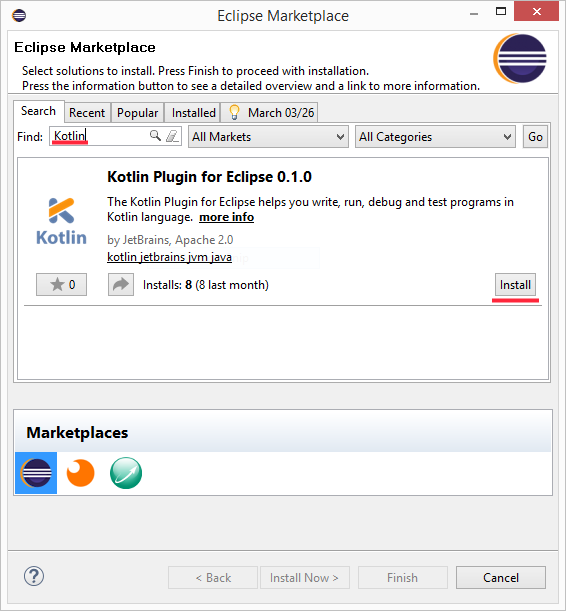
Image0

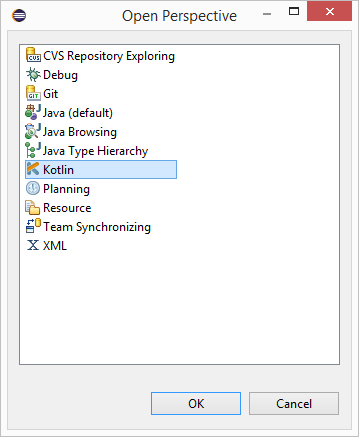
Then restart Eclipse and select Window-> Open Perspective-> Other…, if yousee it Kotlin option indicates that the installation was successful.

Image1

3.3.1. Create a new project #

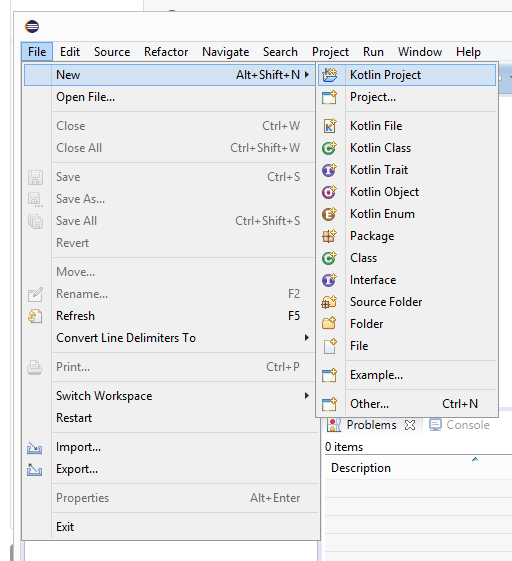
Select File-> New-> Kotlin Project to create Kotlin project:

Image2

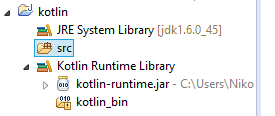
After successful creation, the project structure is as follows:

Image3

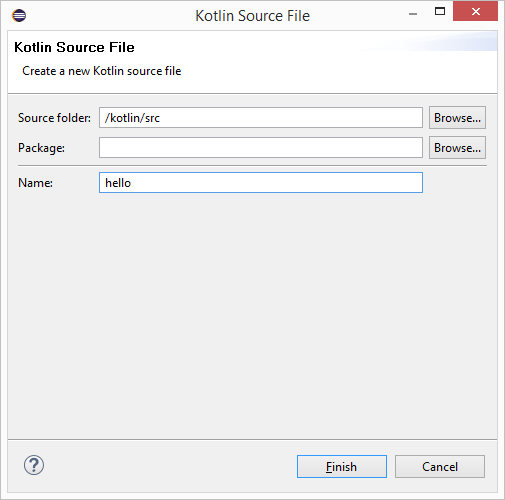
Next, let’s click src folder, creating a Kotlin files, no need to write. ".kt" is automatically added by default, and it can be named at will. Here we create hello
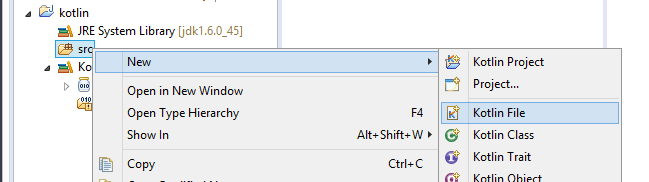
Image4

Image5

Next, we are in hello.kt to write some code in the file. Eclipse provides us with a template to do this quickly, just type main then press Enter , that’s it.
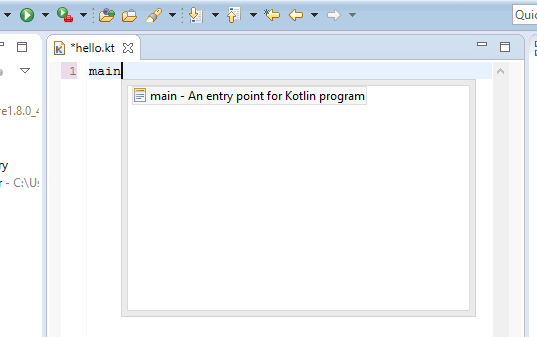
Image6

3.3.2. Run the application #

Next, we are in hello.kt right-click in the edit box and select Run As-> Kotlin Application to run:
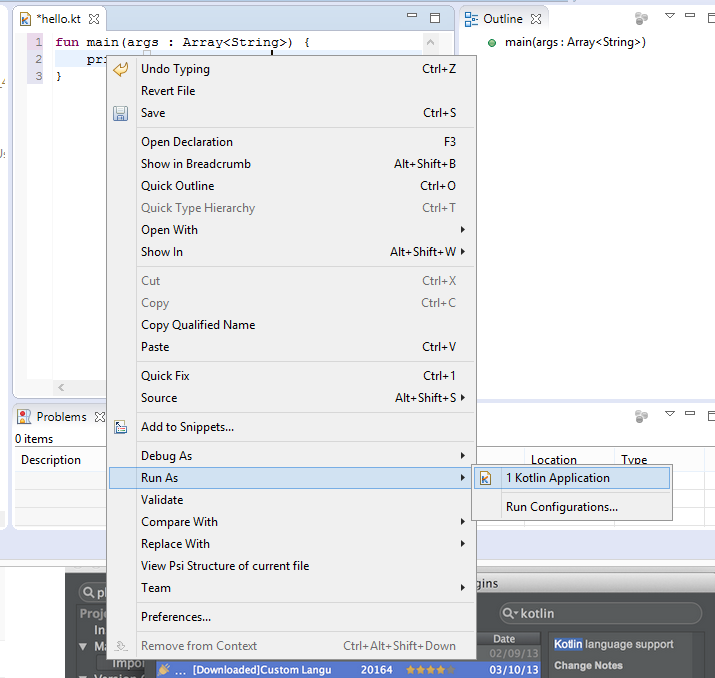
Image7

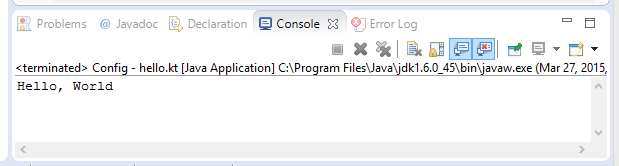
After running successfully, you can run it in the window Console , you can see the results in.

Image8

So the first Kotlin code is running.

Principles, Technologies, and Methods of Geographic Information Systems  102

In recent years, Geographic Information Systems (GIS) have undergone rapid development in both theoretical and practical dimensions. GIS has been widely applied for modeling and decision-making support across various fields such as urban management, regional planning, and environmental remediation, establishing geographic information as a vital component of the information era. The introduction of the “Digital Earth” concept has further accelerated the advancement of GIS, which serves as its technical foundation. Concurrently, scholars have been dedicated to theoretical research in areas like spatial cognition, spatial data uncertainty, and the formalization of spatial relationships. This reflects the dual nature of GIS as both an applied technology and an academic discipline, with the two aspects forming a mutually reinforcing cycle of progress.