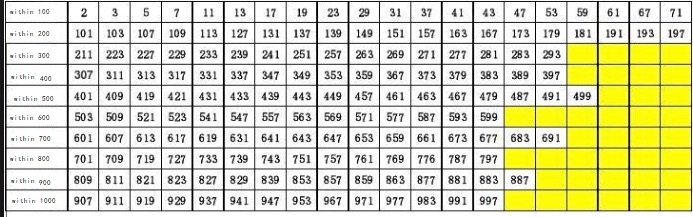
C # allows you to use another loop within one loop, and here are a few examples to illustrate this concept. Nesting in C # Nesting in C # Nesting in C # One thing to note about nested loops is that you can nest any other type of loop within any type of loop. For example, a The following program uses a nested When the above code is compiled and executed, it produces the following results: The prime numbers less than 1000 are: 1.19.1. Grammar #
for
syntax of the loop statement:for ( init; condition; increment )
{
for ( init; condition; increment )
{
statement(s);
}
statement(s);
}
while
syntax of the loop statement:while(condition)
{
while(condition)
{
statement(s);
}
statement(s);
}
do...while
syntax of the loop statement:do
{
statement(s);
do
{
statement(s);
}while( condition );
}while( condition );
for
loops can be nested in
while
within the cycle, and vice versa. 1.19.2. Example #
for
loop to find prime numbers from2 to 100:Example #
using System;
namespace Loops
{

   class Program
   {
      static void Main(string[] args)
      {
         /* Definition of Local Variables */
         int i, j;
         for (i = 2; i < 100; i++)
         {
            for (j = 2; j <= (i / j); j++)
               if ((i % j) == 0) break; // If found, it is not a prime number
            if (j > (i / j))
               Console.WriteLine("{0} is a prime number", i);
         }
         Console.ReadLine();
      }
   }
}
2 is a prime number
3 is a prime number
5 is a prime number
7 is a prime number
11 is a prime number
13 is a prime number
17 is a prime number
19 is a prime number
23 is a prime number
29 is a prime number
31 is a prime number
37 is a prime number
41 is a prime number
43 is a prime number
47 is a prime number
53 is a prime number
59 is a prime number
61 is a prime number
67 is a prime number
71 is a prime number
73 is a prime number
79 is a prime number
83 is a prime number
89 is a prime number
97 is a prime number